

One of the greatest advantages of a TOCO ball screw is its high efficiency—often exceeding 90%.
However, this efficiency is a double-edged sword. In many applications, particularly vertical ones, a ball screw can be "back-driven" by the load it is supposed to hold, potentially leading to equipment damage or injury when power is removed.
1. What is Back-Driving?
Back-driving is the conversion of linear force into rotary motion. While we usually use a motor to turn the screw and move the nut (rotary to linear), back-driving happens when the weight of the carriage pushes the nut, forcing the screw to spin (linear to rotary).
Whether a screw will back-drive depends primarily on the Lead Angle and the Static Friction of the system.
2. The Role of Lead and Pitch
The "Lead" is the linear distance the nut travels in one full revolution of the screw.
High Lead Screws (e.g., 20mm+): These have a steep lead angle. They are highly efficient but very easy to back-drive.
Low Lead Screws (e.g., 5mm or less): These have a shallow lead angle. They require more torque to move but are much more resistant to back-driving.
The "Self-Locking" Myth
In the world of lead screws (Acme screws), there is a concept called "Self-Locking," where the friction is high enough that the screw won't move under load. Precision ball screws are almost never self-locking. Because TOCO ball screws use rolling-element bearings rather than sliding friction, their internal resistance is too low to stop a significant load from falling.
3. Calculating Back-Driving Torque (Tb)
To determine if your motor or brake can hold a load, you must calculate the torque generated by the back-driving force:
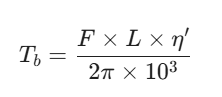
Where:
Tb: Back-driving torque (Nm).
F: Axial load/thrust (N).
L: Lead of the screw (mm).
η: Back-drive efficiency (usually slightly lower than forward efficiency, approx. 0.80–0.85 for TOCO screws).
4. How to Prevent Unwanted Movement
If your system has a vertical axis or is subject to high external forces, you must implement one of the following safety measures:
Electromagnetic Brakes: The most common solution. A brake is mounted to the rear of the servo motor. It is "Normally Closed," meaning it holds the shaft locked until power is applied to release it.
Counterbalancing: Using a pneumatic cylinder or a physical counterweight to offset the mass of the carriage. This reduces the net force (F) acting on the screw.
High-Ratio Gearboxes: Adding a planetary or worm gearbox between the motor and the screw increases the reflected friction and torque required to move the system from the load side.
Holding Brakes on the Screw: In extreme safety-critical cases, a caliper brake can be applied directly to the ball screw shaft or a dedicated brake disk.
5. Comparison: Back-Driving Risk by Lead
| Screw Type (TOCO) | Lead (L) | Back-drive Risk | Required Safety |
| 1605 (5mm Lead) | Low | Moderate | Motor Brake Recommended |
| 1610 (10mm Lead) | Medium | High | Motor Brake Mandatory |
| 1620 (20mm Lead) | Very High | Extreme | Brake + Counterbalance |
TOCO Recommendation: The "Power-Off" Test
Always assume a vertical ball screw will fall. During the commissioning of any TOCO-equipped machine, perform a "Power-Off" test with the maximum expected load. If the axis creeps downward even slightly, the braking torque is insufficient.
For vertical axes, we recommend a brake with a holding torque at least 2x the calculated back-driving torque (Tb).
 English
 German
 French
 Russian
 Spanish
 Japanese
 Korean
 Khmer
 Portuguese
 Ukrainian
 Arabic
 Italian
 Afrikaans
 Albanian
 Armenian
 Azerbaijani
 Basque
 Belarusian
 Bulgarian
 Catalan
 Croatian
 Czech
 Danish
 Dutch
 Estonian
 Filipino
 Finnish
 Galician
 Georgian
 Greek
 Haitian Creole
 Hebrew
 Hindi
 Hungarian
 Icelandic
 Indonesian
 Irish
 Latvian
 Lithuanian
 Macedonian
 Malay
 Maltese
 Norwegian
 Persian
 Polish
 Romanian
 Serbian
 Slovak
 Slovenian
 Swahili
 Swedish
 Thai
 Turkish
 Urdu
 Vietnamese
 Welsh
 Yiddish