

This is a series of knowledge videos designed to help viewers understand linear motion systems, including their components, structure, principles, functions, and applications.The videos are divided into many chapters, so refer to the playlist or the chapter number indicator on the thumbnail of the video to get what you want.
(chapter 1)
Linear motion involves a change in position exclusively along a straight axis in a specified direction without deviation.
Linear motion is a crucial element of contemporary motion control across a diverse array of industries, encompassing robotics, manufacturing, engineering, medical devices, laboratories, semiconductors, packaging, oil and gas, automotive, and aerospace sectors.
To achieve optimal performance in employing a linear motion system, it is imperative that the system be enhanced with state-of-the-art linear technology, ensuring its proper installation, operation, and maintenance. By adhering to best practices, seamless and precise linear motion can be attained, thereby enhancing efficiency and streamlining processes.
Fundamentals of Linear Motion
According to Newton's First Law of Motion, an object that is not subjected to any external forces will continue moving in a straight line without limit.
Speed is characterized as the rate at which distance changes, or more succinctly, the amount of distance covered within a specified timeframe.
Velocity, on the other hand, is the rate at which displacement changes.
Acceleration denotes the rate at which velocity changes.
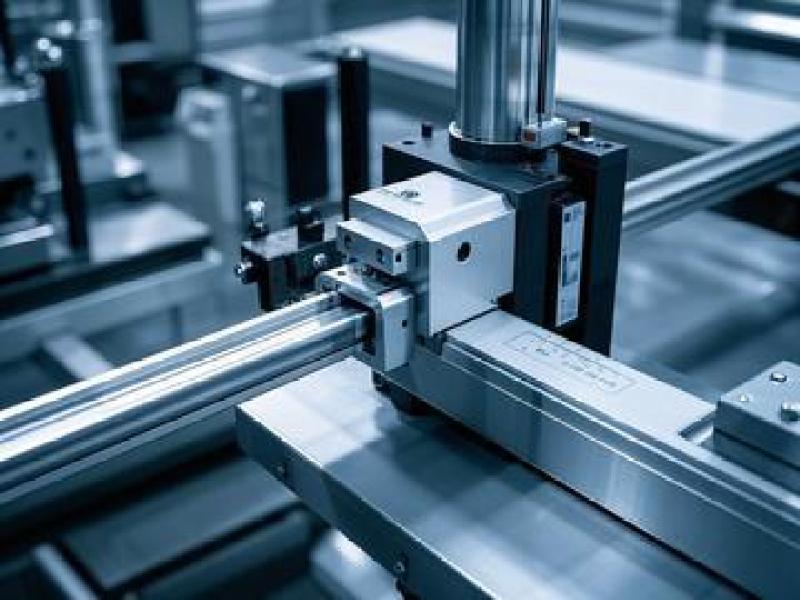
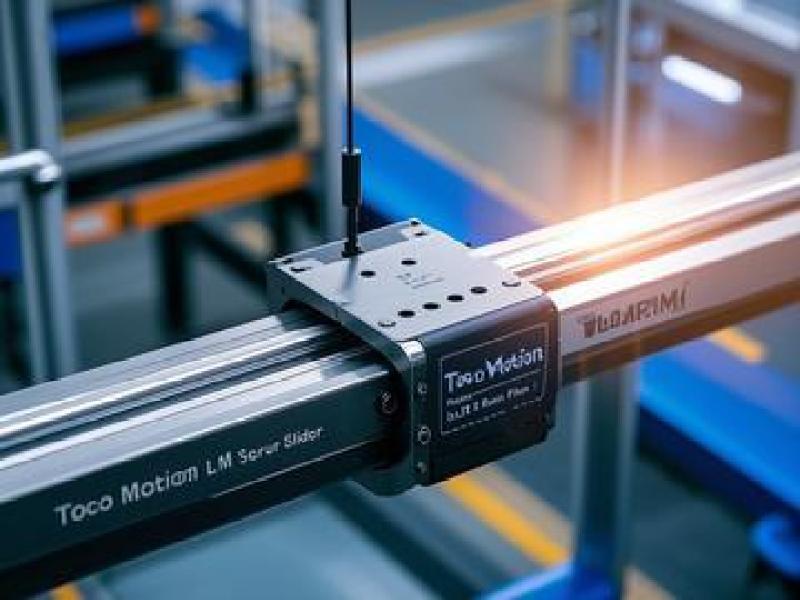
In real-world applications, linear motion products often provide support and guidance for a mass, enabling it to move smoothly along a single axis.


 English
 German
 French
 Russian
 Spanish
 Japanese
 Korean
 Khmer
Khmer Portuguese
 Ukrainian
 Arabic
 Italian
 Afrikaans
 Albanian
 Armenian
 Azerbaijani
 Basque
 Belarusian
 Bulgarian
 Catalan
 Croatian
 Czech
Czech Danish
 Dutch
Dutch Estonian
 Filipino
 Finnish
 Galician
 Georgian
 Greek
Greek Haitian Creole
 Hebrew
 Hindi
Hindi Hungarian
 Icelandic
 Indonesian
 Irish
Irish Latvian
 Lithuanian
 Macedonian
 Malay
Malay Maltese
 Norwegian
 Persian
 Polish
 Romanian
 Serbian
 Slovak
 Slovenian
 Swahili
 Swedish
 Thai
Thai Turkish
 Urdu
Urdu Vietnamese
 Welsh
Welsh Yiddish