

Introduction: The Shift Toward Electric Precision
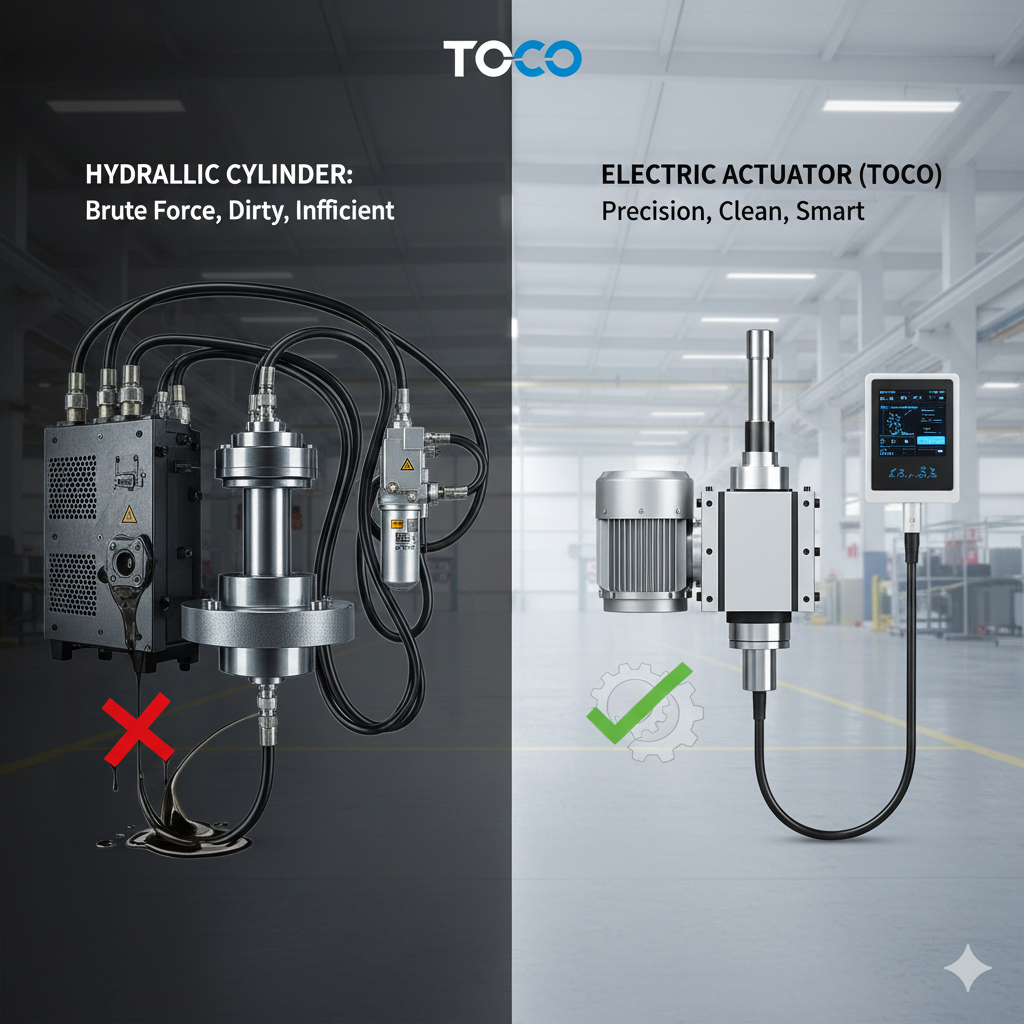
For decades, Hydraulic Cylinders were the undisputed kings of high-force motion. If you needed to move a massive load, you went with fluid power. However, as "Industry 4.0" demands higher precision, cleaner environments, and smarter data, Electric Linear Actuators (electromechanical) have become the preferred choice for modern automation.
This guide breaks down the technical differences to help you choose the right "muscle" for your next machine.
1. What is a Hydraulic Cylinder? (The Brute Force)
Hydraulic systems use pressurized fluid (usually oil) to move a piston inside a cylinder.
The Setup: Requires a complex ecosystem of pumps, reservoirs, filters, valves, and high-pressure hoses.
Best For: Applications requiring "raw power" (up to 40,000+ lbs of force) and shock resistance, such as heavy construction equipment or industrial presses.
The Downside: They are prone to leaks (oil mist/dripping), noisy, and extremely energy-inefficient because the pump must run constantly to maintain pressure.
2. What is an Electric Linear Actuator? (The Precision Brain)
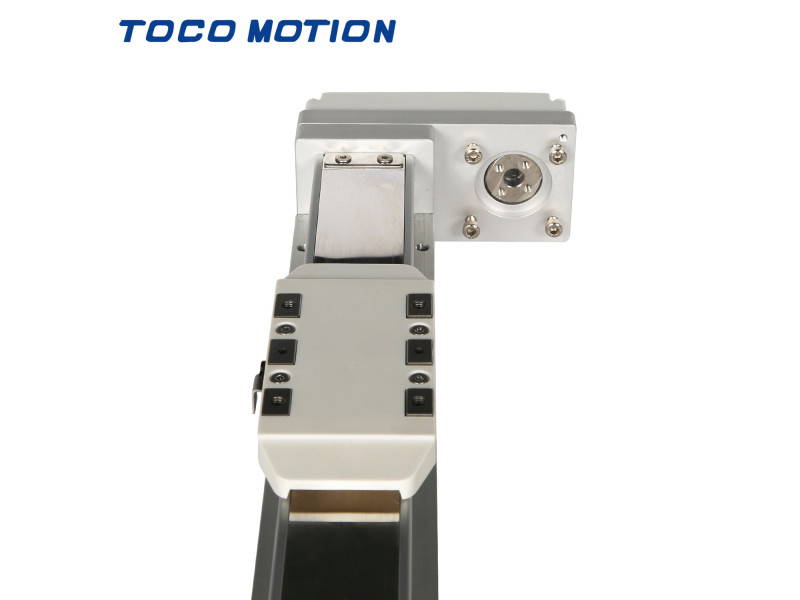
Electric actuators use an electric motor (Servo or Stepper) to turn a Ball Screw or Lead Screw, which moves the actuator rod.
The Setup: A simple "All-in-One" unit connected by cables to a controller.
Best For: CNC machines, medical devices, semiconductor assembly, and high-speed pick-and-place robotics.
The Advantage: Total control over position, speed, and acceleration. They are clean, quiet, and only consume energy when they are actually moving.
3. Key Technical Comparison
| Feature | Hydraulic Cylinders | Electric Actuators (TOCO) |
| Precision | Low (Difficult to stop at mid-stroke) | High (Micrometer-level accuracy) |
| Control | On/Off or limited proportional control | Full Programmability (Velocity & Accel) |
| Efficiency | 40% – 55% (High energy waste) | 75% – 90% (Energy on demand) |
| Maintenance | High (Filter changes, oil leaks, seals) | Low (Self-contained, simple greasing) |
| Cleanliness | Dirty (Oil leaks are inevitable) | Clean (No fluids, safe for food/medical) |
| Force Density | Extremely High | Moderate to High |
4. When Should You Switch to Electric?
If your project falls into any of these categories, an Electric Linear Actuator is the superior engineering choice:
A. You Need "Smart" Motion Control
Hydraulics struggle with complex motion. Electric actuators allow you to program multiple stop points, vary the speed during a single stroke, and synchronize multiple axes perfectly.
B. Cleanroom or Food-Grade Environments
In medical or food processing, an oil leak is a disaster. Electric actuators eliminate this risk entirely, making them the standard for "clean" manufacturing.
C. Lowering Total Cost of Ownership (TCO)
While a hydraulic cylinder is cheap, the system (pumps, valves, hoses) is expensive to install and maintain. Electric actuators have a higher upfront cost but pay for themselves through energy savings and zero leak-related downtime.
The TOCO Advantage: The Heart of the Actuator
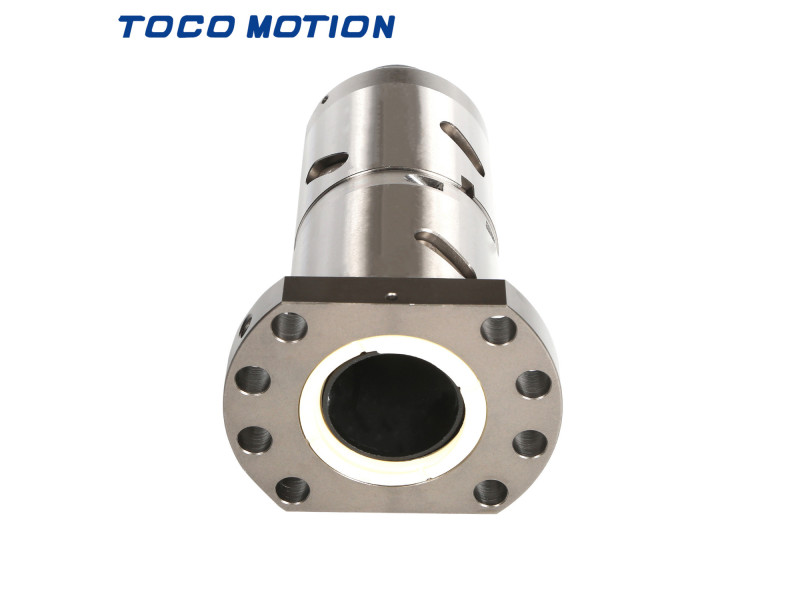
The performance of an electric actuator is only as good as its internal components. TOCO provides the high-precision Ball Screws and Linear Guides that serve as the "heart" of these actuators. By choosing TOCO parts, you ensure:
Zero backlash for precise positioning.
High load-carrying capacity with minimal wear.
Smooth, quiet operation even at high speeds.

 English
 German
 French
 Russian
 Spanish
 Japanese
 Korean
 Khmer
Khmer Portuguese
 Ukrainian
 Arabic
 Italian
 Afrikaans
 Albanian
 Armenian
 Azerbaijani
 Basque
 Belarusian
 Bulgarian
 Catalan
 Croatian
 Czech
Czech Danish
 Dutch
Dutch Estonian
 Filipino
 Finnish
 Galician
 Georgian
 Greek
Greek Haitian Creole
 Hebrew
 Hindi
Hindi Hungarian
 Icelandic
 Indonesian
 Irish
Irish Latvian
 Lithuanian
 Macedonian
 Malay
Malay Maltese
 Norwegian
 Persian
 Polish
 Romanian
 Serbian
 Slovak
 Slovenian
 Swahili
 Swedish
 Thai
Thai Turkish
 Urdu
Urdu Vietnamese
 Welsh
Welsh Yiddish