

Introduction: The "Sandpaper" Effect
In environments like woodworking, metal grinding, or masonry cutting, fine dust settles on linear rails constantly. If this dust isn't removed correctly, it mixes with the lubrication to create a "grinding paste." This paste acts like sandpaper, rapidly wearing down the precision-ground raceways of your TOCO components.
However, improper cleaning is just as dangerous as no cleaning at all. Using the wrong chemicals or tools can destroy the rubber seals, leaving the internal ball bearings defenseless.
1. The Golden Rule: Never Use Compressed Air
The biggest mistake made in machine shops is using a compressed air hose to "blow off" a linear rail.
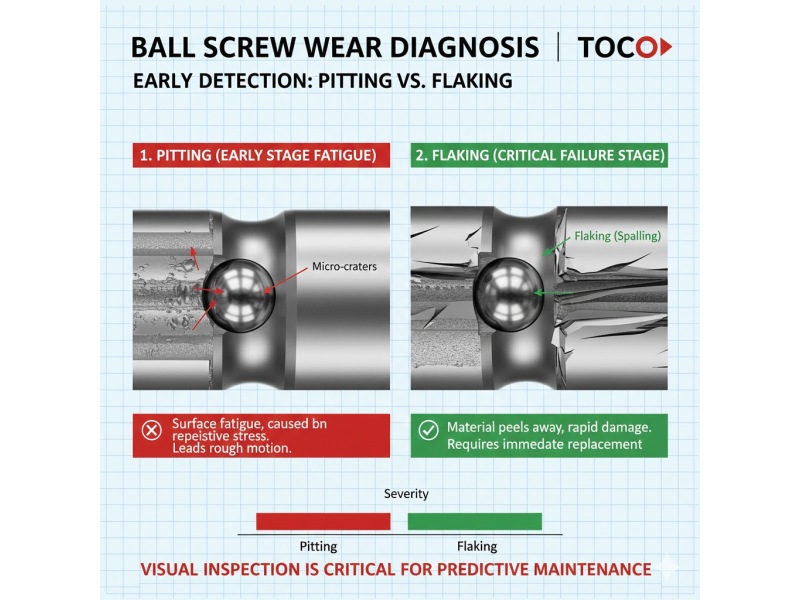
The Danger: High-pressure air doesn't just remove surface dust; it forces tiny particles past the carriage seals and directly into the ball recirculation tracks. Once inside, these particles cause "pitting" and internal jams.
The Alternative: Always use a vacuum or a soft, lint-free cloth to remove loose debris.
2. Choosing the Right Cleaning Agents
Not all degreasers are created equal. Some can cause the rubber seals on a TOCO carriage to swell, crack, or lose their elasticity.
| Safe to Use | Avoid at All Costs |
| Mineral Spirits / White Spirit: Excellent for breaking down old grease without harming seals. | Brake Cleaner (Chlorinated): Can cause rubber seals to become brittle and crack. |
| Isopropyl Alcohol (90%+): Good for light cleaning and removing oils. | Acetone: Highly aggressive; may melt plastic components or end-caps. |
| Mild Alkaline Cleaners: Safe for most metal and plastic parts. | Strong Acids: Will cause hydrogen embrittlement in high-carbon steel. |
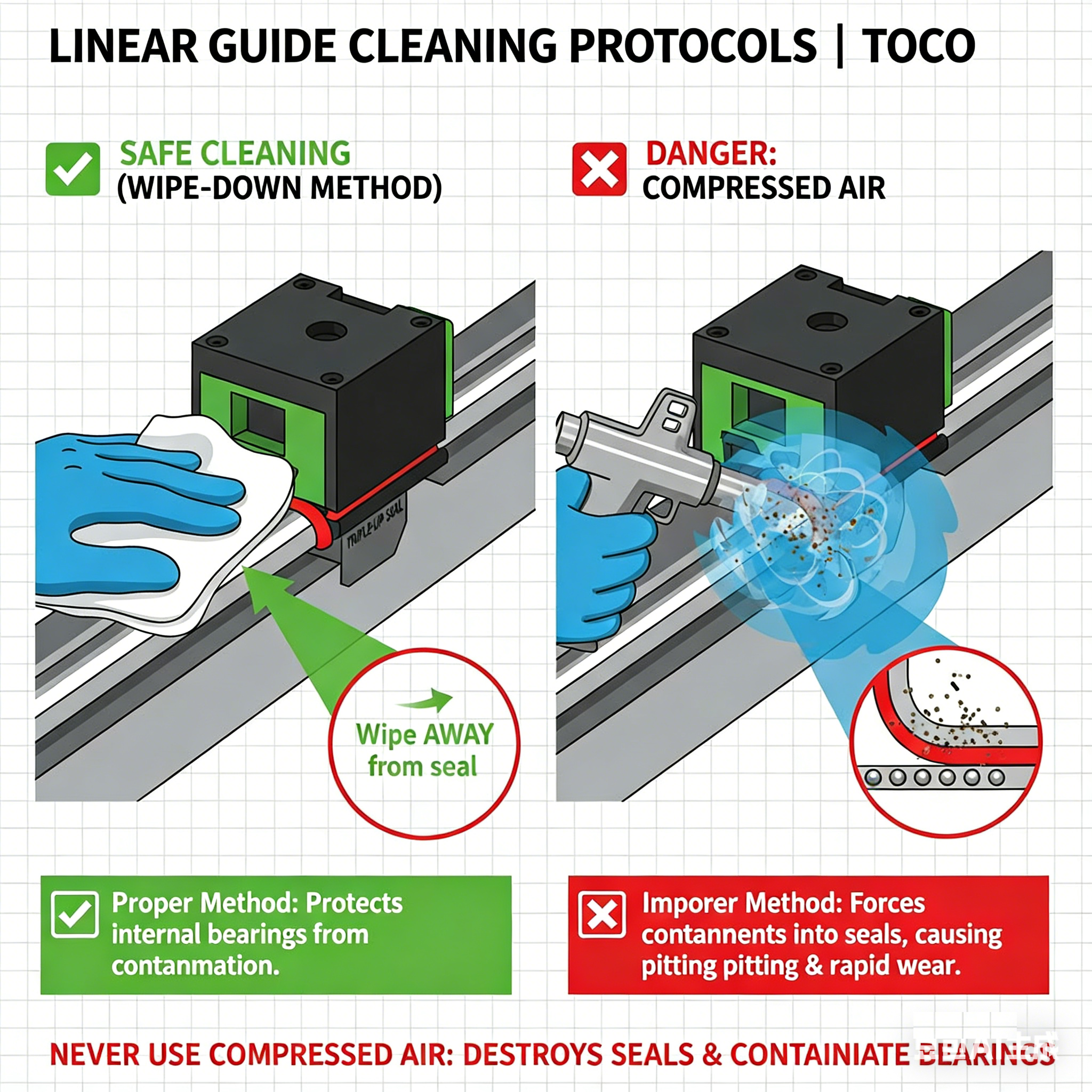
3. The "Two-Step" Wipe-Down Process
To clean a rail without contaminating the carriage, follow this sequence:
Dry Wipe: Use a clean, lint-free cloth to remove the bulk of the surface grime. Always wipe away from the carriage.
Solvent Dampened Wipe: Dampen a clean cloth with mineral spirits. Wipe the rail thoroughly until the cloth comes away clean.
Immediate Re-Oiling: A "naked" steel rail will rust within minutes in humid environments. Immediately apply a light coat of machine oil after cleaning.
4. When to Use Scrapers and Bellows
If your environment is exceptionally dirty (e.g., hot metal chips or sticky resin), standard seals aren't enough.
Metal Scrapers: These are thin stainless steel plates mounted in front of the rubber seals. They "plow" large debris off the rail before the seal touches it.
Bellows (Covers): These accordion-style covers completely seal the rail from the environment. They are the best defense against heavy contamination.
5. Checking Seal Integrity
During cleaning, inspect your carriage seals (the rubber "lips" at each end).
Sign of Failure: If you see "streaks" of grease left behind on the rail as the carriage moves, the seal is no longer making a tight contact.
The Fix: Most TOCO carriage seals are replaceable. Don't wait for the bearing to fail—replace the seal as soon as it shows signs of wear or tearing.
 English
 German
 French
 Russian
 Spanish
 Japanese
 Korean
 Khmer
Khmer Portuguese
 Ukrainian
 Arabic
 Italian
 Afrikaans
 Albanian
 Armenian
 Azerbaijani
 Basque
 Belarusian
 Bulgarian
 Catalan
 Croatian
 Czech
Czech Danish
 Dutch
Dutch Estonian
 Filipino
 Finnish
 Galician
 Georgian
 Greek
Greek Haitian Creole
 Hebrew
 Hindi
Hindi Hungarian
 Icelandic
 Indonesian
 Irish
Irish Latvian
 Lithuanian
 Macedonian
 Malay
Malay Maltese
 Norwegian
 Persian
 Polish
 Romanian
 Serbian
 Slovak
 Slovenian
 Swahili
 Swedish
 Thai
Thai Turkish
 Urdu
Urdu Vietnamese
 Welsh
Welsh Yiddish